

PSLV-I
PSLV
POSTECH Science Launch Vehicle
A sounding rocket programme built by POSTECH students.
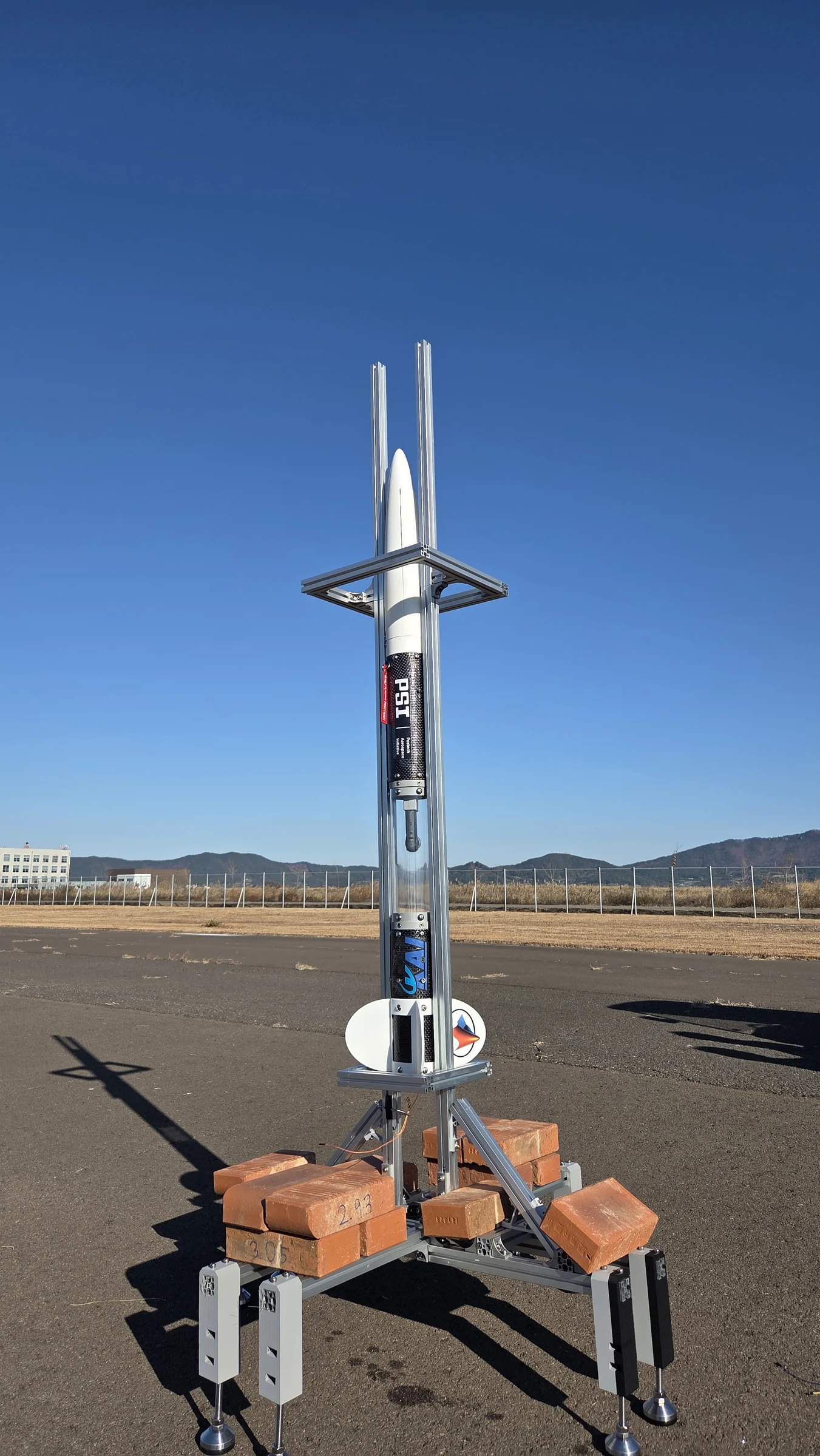
We bring the airframe, flight electronics and recovery hardware together, then test the work on the ground and in flight.
Systems engineering
Avionics
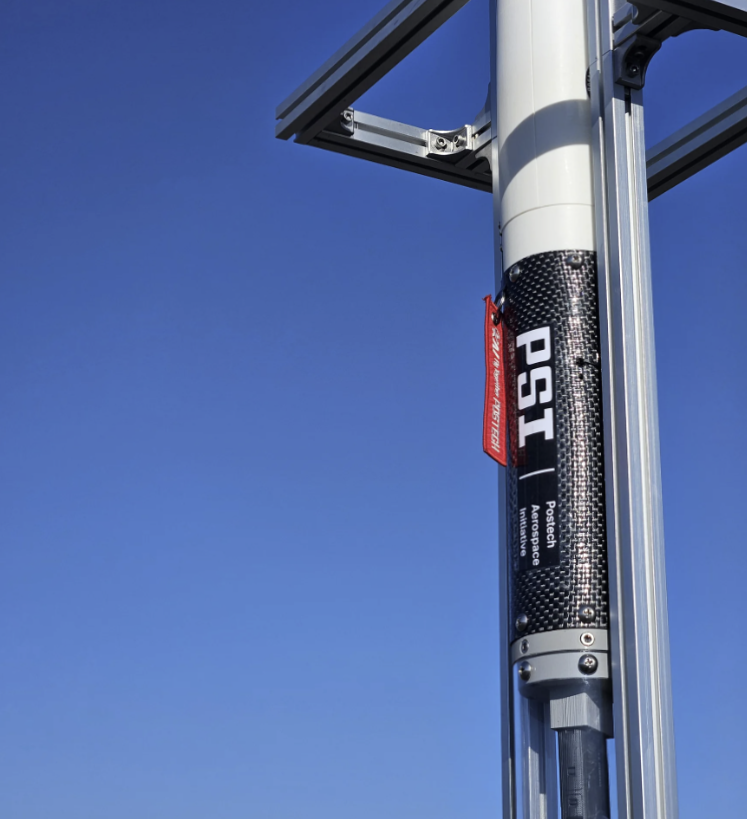
The flight computer brings sensor measurements, motion estimates and recovery decisions together. Onboard logs and a radio link let the team follow the flight and review it afterwards.
Avionics on GitHub- Flight computer
- The dual-core Portenta H7 separates flight computation from storage and radio. The M7 reads sensors, estimates motion and evaluates flight state and recovery commands. The M4 writes microSD logs and sends telemetry through XBee.
- Sensing and estimation
- An IMU measures attitude and acceleration; a BMP390 measures pressure. A vertical unscented Kalman filter (UKF) combines acceleration and barometric altitude to estimate motion. GNSS position is logged separately and does not feed this vertical filter.
- Ground station and logs
- Received telemetry drives the attitude view, flight-state display and altitude plots. Saved logs can be replayed for review. The ground record contains only received samples, so radio gaps can leave it different from the log stored onboard.
Flight reconstruction
Explore 343 received samples across 29.38 seconds. Play the record or seek through it to inspect estimated altitude, vertical velocity and flight state.
Archived telemetry excerpt · flight date and vehicle unconfirmed.
Elapsed0.00 s
Estimated altitude1.305 m
Vertical velocity0.463 m/s
Source statePRELAUNCH
Static recorded trace and summary.
Read the excerpt summary and limits
| Sample | s | m | m/s | State |
|---|---|---|---|---|
| First | 0.00 | 1.305 | 0.463 | PRELAUNCH |
| Received maximum | 11.44 | 186.632 | 3.579 | LAUNCH |
| Final | 29.38 | 45.841 | -6.764 | DEPLOY |
Time is relative to the excerpt start, not liftoff. This is a recorded excerpt, not a live feed, and it is not synchronized with the launch films.
186.632 m is the maximum received altitude estimate in this excerpt, not a vehicle specification. The final state is DEPLOY; landing and completed recovery are not established by this record.
Combustion tests
Measured thrust, pressure and test conditions for each trial.
Key results
| Date | Peak thrust | Total impulse | Burn duration | Peak pressure |
|---|---|---|---|---|
| 2026-07-16 | 323.79 N | 484.66 N s | 2331.2 ms | 38.018 bar |
| 2026-05-28 | 174.19 N | 366.33 N s | 2818.7 ms | 42.496 bar |
| 2026-04-08 | 203.00 N | 387.07 N s | 2687.5 ms | 44.304 bar |
| 2026-04-03 | 174.42 N | 368.74 N s | 3287.5 ms | 39.241 bar |
Flights
Launch and onboard footage from the PSI archive.
The video could not load. Try opening the video file directly. Open this video file
Flight record
PSLV-I
Launch successful; recovery failed
PSLV-II
A recovery mission completed
Aircraft
Quadrotor & VTOL
Aircraft designed and built for student competitions.
Our aircraft work brings vehicle design and fabrication together with research into flight control and stability.
Explore the researchNot a measured result or a drawing of the built vehicle.
Related research
Precision landing
The current precision-landing study combines conventional control with learned residual corrections. It remains a simulation feasibility study, with physical flight validation ahead.